On-Page SEO: Complete Guide for Beginners and Businesses

- Published
- Reading time
- 15 min
On this page 50 sections
What Is On-Page SEO?
Every business wants to appear when potential customers search for products, services or information online. But simply publishing a website or writing a blog is not enough. Your pages need to provide useful information for visitors while making their purpose clear to search engines.
This is where on-page SEO becomes important.
On-page SEO, also known as on-site SEO, is the process of optimizing individual web pages to improve their relevance, usability and visibility in search results.
It includes elements such as:
- Keyword and topic targeting
- Page titles
- Meta descriptions
- Headings
- Content quality
- URLs
- Images
- Internal links
- Structured data
- User experience
Modern on-page SEO is not about repeating a keyword a specific number of times. A successful page should answer the user's question, demonstrate genuine expertise and make its topic easy for both people and search systems to understand.
For businesses, on-page optimization should be part of a wider strategy that combines content, technical performance and digital authority. SEO Marketing Agency™ can help businesses build this foundation through a broader SEO strategy.
What Does On-Page SEO Include?
A well-optimized page combines multiple elements rather than relying on one SEO tactic.
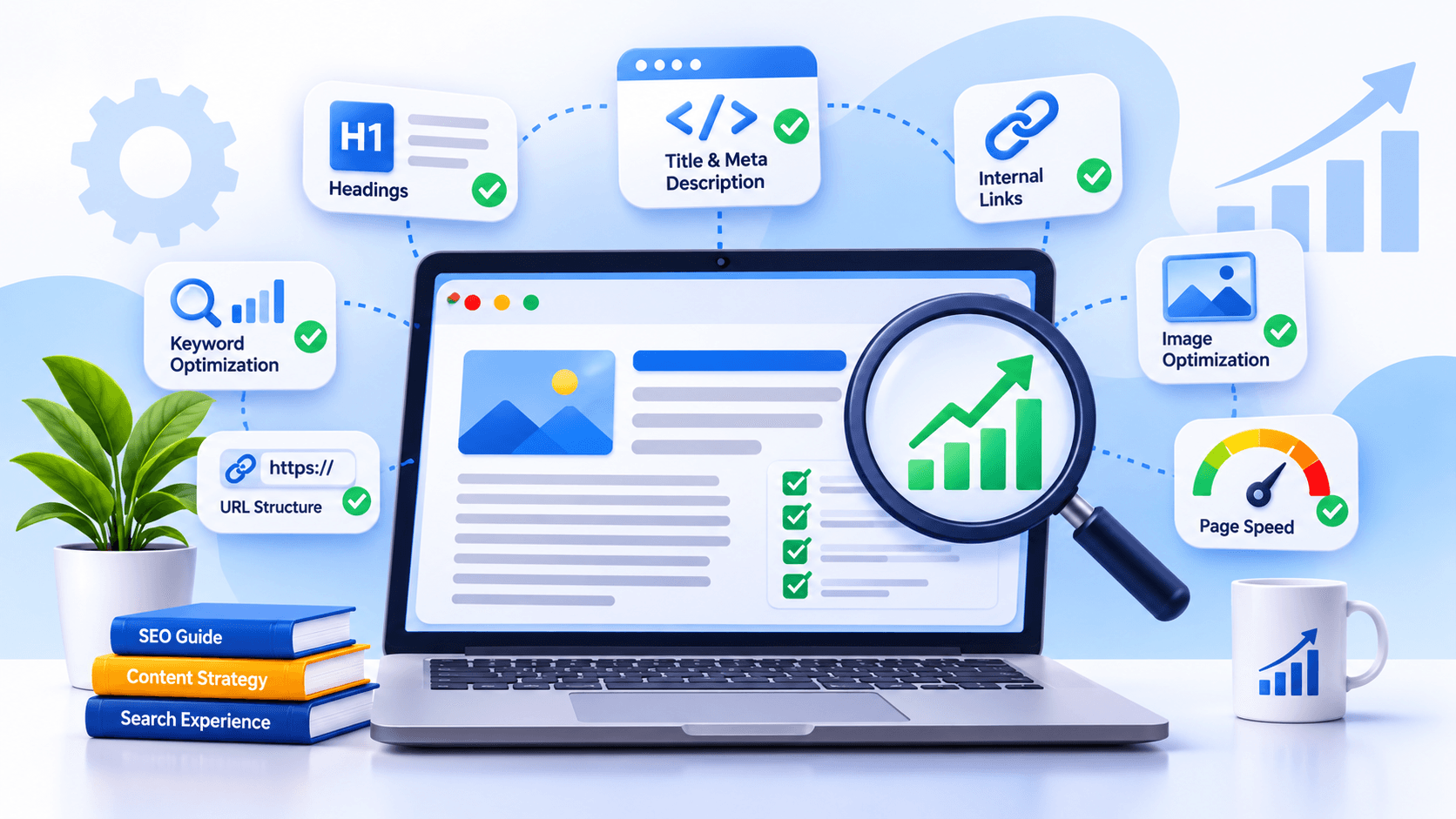
The main areas of on-page SEO include:
- Understanding search intent
- Keyword and topic research
- SEO title optimization
- Meta descriptions
- H1 and heading structure
- Helpful and original content
- URL optimization
- Image optimization
- Internal linking
- External sources and evidence
- Schema markup
- Page experience and readability
- Mobile optimization
- Content freshness
The most effective approach is to treat these elements as part of one complete system.
A perfectly optimized title cannot compensate for poor content. Similarly, excellent content may not perform to its full potential if search engines cannot easily crawl, understand or access the page.
On-Page SEO vs Technical SEO vs Off-Page SEO
SEO is often divided into three interconnected areas.
On-Page SEO
On-page SEO focuses on the content and elements directly available on a website.
Examples include:
- Content optimization
- Page titles
- Headings
- URLs
- Images
- Internal links
Technical SEO
Technical SEO focuses on the infrastructure that helps search engines crawl, index and understand a website.
This includes areas such as:
- Crawlability
- Indexation
- Site architecture
- XML sitemaps
- Canonicalization
- Page performance
- Mobile accessibility
For a deeper look at the technical side of optimization, explore our Technical SEO Services.
Off-Page SEO
Off-page SEO focuses on signals beyond your own website, including:
- Quality backlinks
- Digital PR
- Brand mentions
- Online authority
The strongest SEO strategies combine all three areas.
Great content + strong technical foundations + genuine authority = a stronger long-term SEO strategy.
Why Is On-Page SEO Important?
On-page SEO helps users and search engines answer an important question:
What is this page about, and does it provide the information the searcher needs?
A well-optimized page can help businesses:
- Improve organic visibility
- Attract more relevant traffic
- Improve user experience
- Build topical authority
- Increase engagement
- Support leads and conversions
On-page SEO is also becoming increasingly important in the evolving AI search landscape. Clear headings, direct answers, descriptive page elements and well-organized content can make information easier for different search systems to understand and surface.
This means the fundamentals of good SEO continue to matter—even as search evolves.
The Complete On-Page SEO Checklist
1. Understand Search Intent Before Creating Content
Before targeting a keyword, understand why someone is searching for it.
Search intent generally falls into four categories:
Informational Intent
The user wants to learn something.
Examples:
- What is on-page SEO?
- How does SEO work?
- What is keyword research?
Navigational Intent
The user is looking for a specific website or brand.
Examples:
- SEO Marketing Agency
- Google Search Console login
Commercial Intent
The user is researching options before making a decision.
Examples:
- Best SEO agency
- Best SEO tools
- SEO agency vs freelancer
Transactional Intent
The user is ready to take action.
Examples:
- Hire an SEO agency
- Technical SEO services
- SEO consulting services
Your page should match the likely purpose behind the search.
For example, someone searching for "what is on-page SEO" needs an educational guide. Someone searching for "on-page SEO services" may need information about a service provider.
One of the biggest SEO mistakes is targeting the right keyword with the wrong type of content.
2. Conduct Keyword and Topic Research
Keywords help you understand the words and questions your audience uses when searching.
For this guide, the primary keyword is:
On-page SEO
Related keywords and topics may include:
- On-page SEO checklist
- On-page SEO techniques
- On-page SEO optimization
- On-site SEO
- How to do on-page SEO
- On-page SEO factors
However, keyword research should go beyond choosing one high-volume phrase.
Consider:
- Search volume
- Competition
- Search intent
- Business relevance
- Conversion potential
- Related questions and subtopics
A business does not always need to target the biggest keyword. A more specific keyword can sometimes attract a more relevant audience and generate better business results.
The goal is to identify the topic your audience needs help with and create content that covers that topic comprehensively.
3. Optimize Your SEO Title
The title tag helps communicate the topic of a page to search engines and potential visitors.
A strong SEO title should be:
- Clear
- Descriptive
- Relevant
- Unique
- Compelling without being misleading
For example:
On-Page SEO: Complete Guide for Beginners and Businesses
The title should accurately represent what the visitor will find on the page.
Avoid:
- Keyword stuffing
- Duplicate titles
- Misleading clickbait
- Generic titles that do not describe the content
A useful title helps set expectations before a visitor even reaches your website.
4. Write a Compelling Meta Description
A meta description provides a short summary of the page.
For this article:
Learn what on-page SEO is and how to optimize keywords, content, titles, URLs, images and internal links with this complete guide.
A good meta description should:
- Accurately summarize the page
- Match the user's likely search intent
- Highlight the value of the content
- Be unique for important pages
- Encourage relevant users to visit
While a meta description should not make promises the content cannot deliver, it can help communicate why a searcher should choose your result.
5. Use a Clear and Descriptive URL
URLs should help users understand what a page is about.
For example:
/blog/on-page-seo-complete-guide
A good URL is generally:
- Short
- Descriptive
- Relevant
- Easy to understand
Avoid unnecessarily complicated URLs containing random numbers, excessive parameters or unrelated words.
If you change an established URL, make sure the migration is handled correctly to avoid broken links and lost traffic.
6. Create a Clear Heading Structure
Headings help organize your content for readers.
A logical structure might look like this:
H1: Main topic
H2: Major topic or section
H3: Supporting point
A clear hierarchy makes longer content easier to scan and navigate.
Your H1 should clearly explain the main topic of the page. Supporting headings should organize related subtopics logically.
For example:
H1: On-Page SEO: Complete Guide for Beginners and Businesses
H2: What Is On-Page SEO?
H2: Why Is On-Page SEO Important?
H2: The Complete On-Page SEO Checklist
The goal is clarity—not adding headings simply to insert keywords.
7. Use Keywords Naturally in Your Content
Keywords still help communicate relevance, but natural language should always come first.
Consider using your primary topic naturally in relevant areas, including:
- The title
- The H1
- The introduction
- Relevant subheadings
- Body content
- Image context
For example, this article introduces the topic of on-page SEO early so readers immediately understand what the page covers.
However, avoid forcing the same phrase repeatedly into every paragraph.
Instead, use related concepts and natural variations.
For an on-page SEO article, related terms might include:
- Search intent
- Content optimization
- SEO titles
- Internal linking
- Technical SEO
- Page experience
The goal is not to achieve a specific keyword density.
The goal is to explain the topic completely and naturally.
8. Create Helpful, Original and Comprehensive Content
Content is at the center of on-page SEO.
Before publishing, ask:
- Does this content answer the user's question?
- Does it provide original value?
- Is it accurate?
- Is it easy to understand?
- Does it demonstrate knowledge or experience?
- Is it better or more useful than a generic answer?
High-quality content does not necessarily mean making every page longer.
A product page may need a concise description. A complex educational topic may require a detailed guide.
The right length depends on what the user needs.
Focus on Value, Not Word Count
There is no universal word count that guarantees rankings.
Do not add unnecessary paragraphs simply to make an article longer.
Instead, cover:
- The core question
- Important supporting topics
- Practical examples
- Common problems
- Useful next steps
A complete answer is more valuable than a long answer filled with unnecessary information.
9. Structure Content for Easy Reading
Most visitors do not read every word on a page. They scan.
Make your content easier to consume by using:
- Short paragraphs
- Clear headings
- Bullet points
- Numbered steps
- Tables where appropriate
- Bold text for important points
- Relevant visuals
Each major section should have a clear purpose.
Where possible, answer the question suggested by a heading early in the section. Then provide additional explanation, examples and context.
This approach can make content easier for both readers and search systems to understand.
10. Optimize Images and Visual Content
Visual content can make information easier to understand and more engaging.
Consider using:
- Original screenshots
- Infographics
- Data visualizations
- Product images
- Instructional videos
- Diagrams where appropriate
When optimizing images:
- Use relevant filenames
- Add useful alt text to meaningful images
- Place visuals near related content
- Compress large files where appropriate
- Avoid using visuals simply as decoration
Alt text should describe the image and its purpose.
Do not stuff alt text with keywords.
For businesses, original screenshots, examples and first-hand visuals can also help demonstrate real experience.
11. Build a Strategic Internal Linking Structure
Internal links connect related pages across your website.
They can help visitors discover additional information and help search engines understand relationships between your content.
For example, this guide can naturally link to:
- SEO Marketing Agency™ for broader SEO solutions.
- Technical SEO Services for website infrastructure and technical optimization.
- Relevant SEO guides and case studies across your website.
Use descriptive anchor text.
Better:
Learn more about our technical SEO services.
Less descriptive:
Click here.
Every internal link should provide genuine value to the reader.
Do not add excessive links simply for SEO purposes.
12. Use Credible External Sources and Evidence
Strong content should support important claims with reliable evidence where appropriate.
Useful sources can include:
- Official documentation
- First-party research
- Industry studies
- Case studies
- Original data
- Expert analysis
For example, Google Search documentation can provide useful evidence when discussing how crawling, indexing or structured data works.
External links should be relevant to the topic and useful for the reader.
A good external source adds context. It should not distract from the main purpose of the page.
13. Add Relevant Schema Markup
Schema markup is structured data that can help search engines better understand specific information on a page.
Depending on the content, relevant schema types may include:
- Article
- Product
- Local Business
- Event
- Recipe
Structured data does not guarantee enhanced search results.
However, correctly implemented markup can provide additional context about the content and, where eligible, help search engines display certain types of rich results.
Businesses should use schema that accurately represents the content visible on the page.
Never add structured data simply to claim information that does not exist.
14. Improve Page Experience and Readability
A page may contain excellent information but still provide a poor experience if it is difficult to use.
Consider:
- Is the text easy to read?
- Is the page easy to navigate?
- Are important elements easy to find?
- Are intrusive pop-ups interrupting the visitor?
- Are buttons and forms easy to use?
The goal is simple:
Make it easy for visitors to find, understand and use the information on your website.
Good SEO and good user experience should support each other.
15. Make Your Website Mobile-Friendly
A large percentage of searches happen on mobile devices.
Your content should work well across different screen sizes.
Review:
- Responsive design
- Text readability
- Button size
- Navigation
- Images
- Forms
Do not assume a page that looks good on a desktop automatically provides a good mobile experience.
Test important pages on mobile devices and identify usability problems.
16. Consider Page Speed and Performance
Slow pages can create a poor user experience.
Common performance issues include:
- Large unoptimized images
- Excessive scripts
- Redirect chains
- Heavy code
- Render-blocking resources
Improving page performance is primarily about creating a better experience for visitors while maintaining a technically healthy website.
Page speed and Core Web Vitals should be reviewed as part of a wider technical SEO strategy.
For a deeper technical review, businesses can explore Technical SEO Services.
17. Make Sure Important Pages Can Be Crawled and Indexed
Excellent on-page content will have limited value if search engines cannot access it.
Check important pages for:
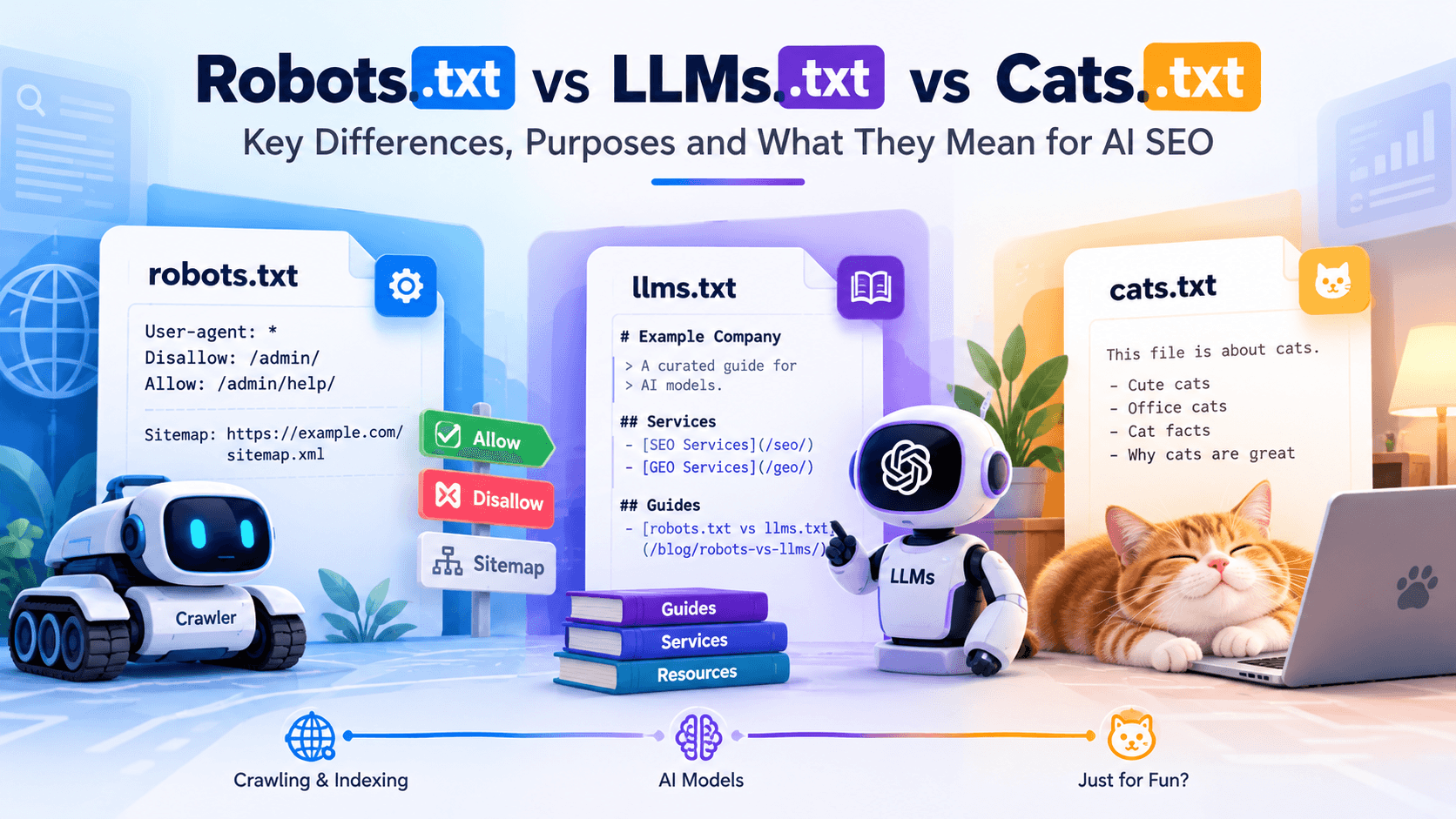
- Incorrect robots.txt rules
- Unintended noindex tags
- Broken internal links
- Incorrect canonical tags
- Sitemap issues
This is where on-page SEO and technical SEO overlap.
Your website should have a clear structure that makes important pages accessible through logical navigation and internal links.
18. Keep Your Content Updated
SEO is not a one-time activity.
Review important pages regularly to:
- Update outdated information
- Add new examples
- Refresh statistics
- Fix broken links
- Improve explanations
- Remove irrelevant content
Updating a page should not mean changing dates without improving the information.
Focus on making the content genuinely more useful.
Common On-Page SEO Mistakes to Avoid
Keyword Stuffing
Repeating the same keyword excessively can make content unnatural and difficult to read.
Ignoring Search Intent
Targeting a keyword is not enough. Your page must match what the user is actually trying to find.
Thin Content
Do not create pages simply because a keyword has search volume.
Every page should have a clear purpose.
Duplicate Content
Avoid publishing multiple pages that provide substantially the same information without a clear reason.
Poor Internal Linking
Important content should not be isolated from the rest of your website.
Ignoring Mobile Users
A page that is difficult to use on a phone can create a poor experience for a significant portion of your audience.
Ignoring Technical Problems
Crawling, indexing and performance issues can limit the potential of otherwise excellent content.
On-Page SEO in the AI Search Era
Search is evolving beyond traditional search results.
Users increasingly discover information through:
- Search engines
- AI-powered search experiences
- AI assistants
- Large language models
However, the fundamentals of good on-page SEO remain highly relevant.
Clear and well-structured content can make it easier for different systems to understand:
- What your page is about
- Which questions it answers
- What expertise you demonstrate
- Which supporting evidence you provide
Businesses should continue investing in strong SEO fundamentals while preparing for new search environments.
This is where traditional SEO and Generative Engine Optimization can work together.
GEO Digital focuses on AI Search, Generative Engine Optimization and LLM visibility, helping businesses think beyond traditional search results.
The future does not necessarily mean replacing SEO with GEO.
Instead:
Strong SEO foundations can support a broader strategy for visibility across both search engines and emerging AI-powered discovery platforms.
The Complete On-Page SEO Checklist
Before publishing or updating a page, review this checklist.
Keyword and Intent
- Do I understand the search intent?
- Is the keyword relevant to my audience and business?
- Have I covered relevant subtopics?
Titles and Metadata
- Is the SEO title clear and unique?
- Does it accurately describe the page?
- Is the meta description useful and relevant?
Content
- Does the content answer the user's question?
- Is the information accurate?
- Does it provide original value?
- Is the content easy to read?
- Have I avoided keyword stuffing?
Structure
- Does the page have a clear H1?
- Are H2 and H3 headings organized logically?
- Can visitors easily scan the content?
URLs and Images
- Is the URL descriptive?
- Are images relevant?
- Do meaningful images have appropriate alt text?
- Are large images optimized for performance?
Links
- Have I added relevant internal links?
- Is the anchor text descriptive?
- Are external sources credible and useful?
Technical Foundations
- Can search engines crawl the page?
- Is the page indexable where appropriate?
- Are there any important technical errors?
User Experience
- Is the page easy to read?
- Does it work well on mobile?
- Is the page reasonably fast?
Content Maintenance
- Is the information current?
- Are important links working?
- Does the page still match user needs?
Final Thoughts
On-page SEO is not about following a secret formula.
It is about understanding your audience and creating pages that provide the best possible answer to their needs.
Start with these fundamentals:
- Understand search intent.
- Research relevant keywords and topics.
- Write clear titles and headings.
- Create helpful and original content.
- Structure content for easy reading.
- Optimize URLs and images.
- Build meaningful internal links.
- Support important claims with credible evidence.
- Maintain strong technical foundations.
- Review and improve your content over time.
For businesses, on-page SEO should be part of a broader growth strategy.
SEO Marketing Agency™ can provide the foundation for traditional SEO, including content and technical optimization, while GEO Digital represents the next stage of visibility across AI-powered and generative search experiences.
The core principle remains unchanged: create genuinely useful content for people first, then make it easy for search engines and AI systems to understand, trust and discover it.
Questions, answered
Frequently Asked Questions
What is on-page SEO?
On-page SEO is the process of optimizing individual pages on a website to improve their relevance, usability and visibility in search results. It includes content, titles, headings, URLs, images and internal links.
What is the difference between on-page and off-page SEO?
On-page SEO focuses on elements within your website, while off-page SEO focuses on external signals such as backlinks, brand mentions and digital authority.
How many keywords should I use on a page?
There is no fixed number. Use relevant keywords and related terms naturally where they help explain the topic. Focus on clarity and usefulness rather than keyword density.
How do I optimize a page for search intent?
Start by understanding what the searcher wants to achieve. Review the type of content that ranks for the topic and identify whether the intent is informational, commercial, navigational or transactional. Then create a page that directly addresses that need.
How often should I update on-page SEO content?
Important pages should be reviewed regularly, especially when information, statistics, search intent or industry practices change. Update content when you can make it more accurate, useful and relevant—not simply to change the publication date.
Does internal linking help on-page SEO?
Yes. Relevant internal links help visitors discover related information and help search engines understand the relationship between pages on your website. Use descriptive anchor text and link only when it provides genuine value to the reader.
Does on-page SEO help with AI search and GEO?
Yes. Clear structure, direct answers, original insights and credible supporting evidence can make content easier for both traditional search engines and AI-powered discovery systems to understand. Strong SEO fundamentals can provide an important foundation for a broader GEO and AI search visibility strategy.
How long does it take to see results from on-page SEO?
The timeline varies depending on your website's authority, competition, technical health and the scale of the improvements. Some changes may improve relevance and user experience quickly, while meaningful organic growth can take several weeks or months. On-page SEO works best as part of a consistent, long-term SEO strategy.