What Is SEO? A Complete Guide to Search Engine Optimization
SEO, or Search Engine Optimization, is the process of improving a website so search engines can better understand its content and users can more easily discover it through organic search results.

- Published
- Updated
- Reading time
- 11 min
On this page 32 sections
For businesses, SEO is more than simply ranking for a few keywords. A successful SEO strategy helps attract relevant audiences, build brand visibility, improve website performance and create a sustainable source of organic traffic.
Search has also evolved. Today, businesses need to think beyond the traditional blue links on Google. Search visibility can include Google Search, featured results, AI-powered search experiences and other platforms where users discover answers and brands.
This guide explains what SEO is, how it works, the different types of SEO and how businesses can build a long-term SEO strategy.
What Is SEO?
SEO stands for Search Engine Optimization.
It is the practice of improving a website's visibility in organic or unpaid search results. SEO involves helping search engines understand your website while creating useful, relevant content and a better experience for the people searching for information, products or services.
Google describes SEO as helping search engines understand content and helping users find a website and decide whether to visit it.
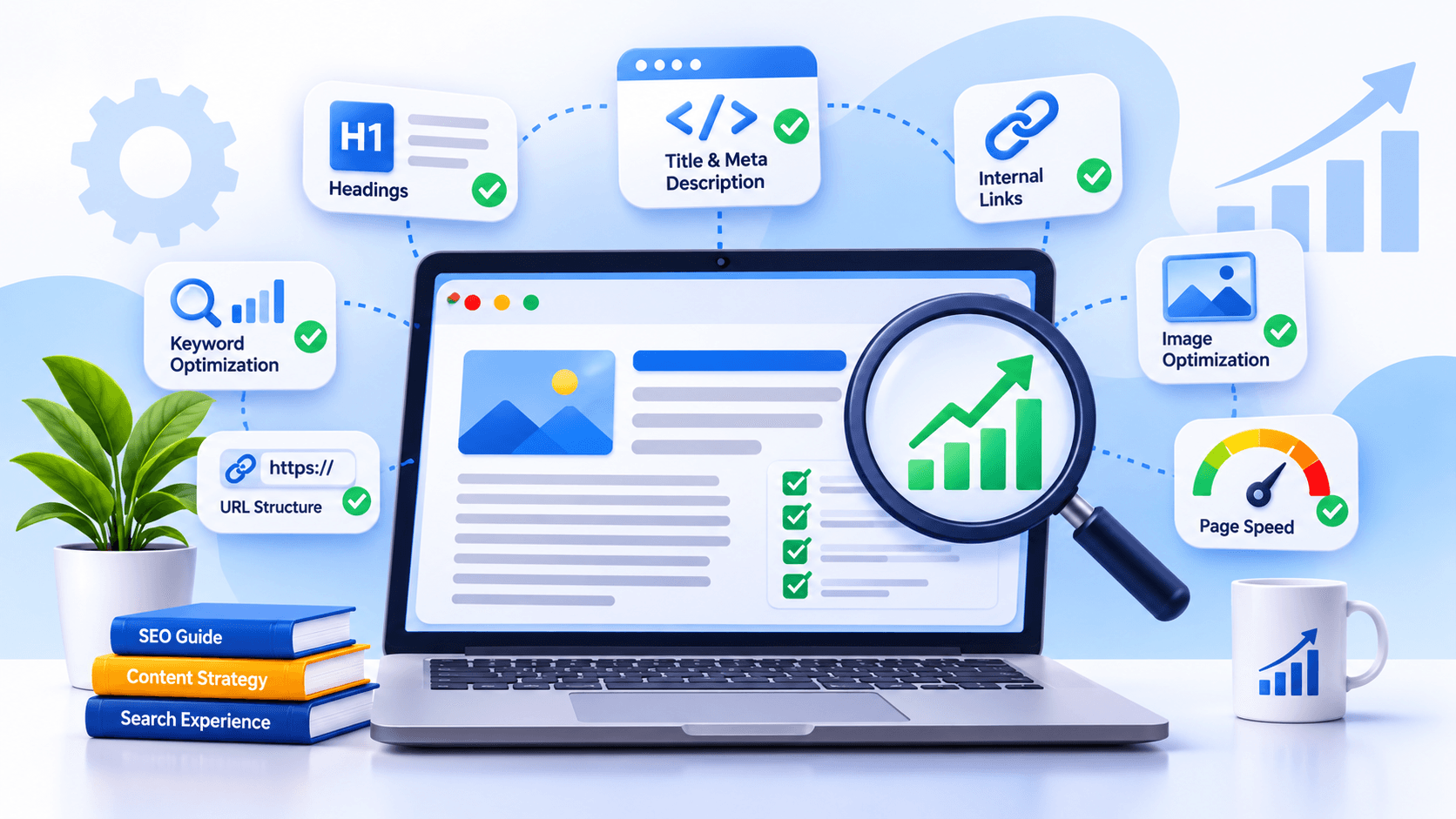
A complete SEO strategy can involve:
- Keyword and search intent research
- On-page SEO
- Technical SEO
- Content optimization
- Internal linking
- Authority and link building
- User experience improvements
- Local SEO
- Performance measurement and reporting
For businesses looking for a structured approach, these disciplines work together as part of a broader SEO marketing strategy.
How Does SEO Work?
To understand SEO, it helps to understand the basic journey of a webpage through a search engine.
In simple terms, the process involves three major stages:
1. Crawling
Search engines use automated systems to discover webpages across the internet. Links between pages help search engines find new and existing content.
A logical website structure and relevant internal links can make it easier for search engines and users to understand how pages relate to one another. Google also notes that links are an important way new pages are discovered.
2. Indexing
After a page is discovered, a search engine processes its content and attempts to understand what the page is about.
Technical problems, duplicate content, blocked resources or poor website architecture can affect how efficiently search engines access and process important pages.
This is why a regular technical SEO strategy is an important part of maintaining organic search visibility.
3. Ranking
When someone enters a search query, search engines evaluate potentially relevant pages and determine which results may be most useful.
There is no single SEO tactic that guarantees a number-one ranking. Search visibility is influenced by many factors, including the relevance and usefulness of content, technical accessibility and how well a page serves the user's search intent. Google specifically advises against expecting a single “secret” that will automatically rank a website first.
Why Is SEO Important for Businesses?
People use search engines throughout the buying journey.
A potential customer may search for:
- What is the best product for a specific problem?
- Which companies offer a particular service?
- How much does a solution cost?
- Which provider is available in their location?
- How can they compare different options?
SEO helps businesses become visible during these moments.
SEO Can Build Long-Term Organic Visibility
Paid advertising can generate immediate visibility, but that visibility generally depends on continued advertising investment.
SEO works differently. Well-optimized content and technically sound webpages can continue attracting relevant visitors over time.
That does not mean SEO is a one-time activity. Websites need ongoing monitoring, content improvements and technical maintenance. However, a strong organic presence can become a valuable long-term marketing asset.
SEO Helps Reach High-Intent Audiences
Not all website traffic has the same value.
A visitor searching for a highly relevant product or service may be much closer to taking action than someone who sees a general advertisement.
Keyword research and search intent analysis help businesses understand what their potential customers are actually searching for and create content that addresses those needs.
SEO Supports Brand Visibility and Authority
Consistently publishing useful content can help a business build topical relevance and become more visible across important search topics.
Google's guidance emphasizes creating helpful, reliable, people-first content rather than simply producing content for search engines.
The Four Main Types of SEO
Although SEO strategies can be highly detailed, most work can be grouped into four major areas.
1. On-Page SEO
On-page SEO involves optimizing the content and elements within a webpage.
Common areas include:
- Page titles
- Headings
- Content structure
- Keyword and topic relevance
- Meta descriptions
- Images and alt text
- Internal links
- URLs
The goal is not to repeat keywords excessively. Instead, the goal is to create a clear, useful page that helps users and search engines understand the topic.
Google recommends clear, descriptive titles and useful content that is easy to read and well organized.
For a detailed implementation process, readers can explore our complete guide to on-page SEO.
2. Technical SEO
Technical SEO focuses on the infrastructure and technical health of a website.
Common technical SEO areas include:
- Crawlability
- Indexability
- XML sitemaps
- Robots.txt
- Canonical tags
- Redirects
- Page speed
- Mobile usability
- Structured data
- Duplicate content
- Website architecture
Technical SEO helps ensure that important content can be accessed and understood properly by search engines.
For example, Google explains that if important resources are inaccessible, search engines may have difficulty understanding pages. It also recommends addressing duplicate versions of content through appropriate canonicalization or redirects where needed.
Learn more about our technical SEO services and read our technical SEO audit checklist.
3. Off-Page SEO
Off-page SEO refers to activities that can help build a website's authority and visibility beyond its own pages.
This may include:
- Earning relevant editorial links
- Digital PR
- Brand mentions
- Industry publications
- Content promotion
- Building relationships within your industry
The focus should be on earning genuine recognition rather than pursuing low-quality or manipulative links.
Google notes that links can help users and search engines discover pages and can provide useful context when they point to relevant and trustworthy resources.
A sustainable off-page strategy should prioritize relevance, quality and long-term brand value.
4. Content SEO
Content is one of the most important parts of a modern SEO strategy.
Strong SEO content starts by understanding:
- What is the user searching for?
- What problem are they trying to solve?
- What information do they need?
- What format would best answer their question?
Content can include:
- Blog posts
- Service pages
- Product pages
- Case studies
- Guides
- FAQs
- Research
- Videos and visual resources
Google's SEO guidance recommends creating unique, useful and people-first content rather than simply copying or rehashing existing material.
How to Do Keyword Research for SEO
Keyword research is the process of identifying the words, questions and topics people use when searching.
However, modern keyword research should go beyond search volume alone.
A useful keyword strategy considers:
Search Intent
What does the user actually want?
For example, someone searching for “what is SEO” is likely looking for educational information.
Someone searching for “SEO agency in India” may be looking for a service provider.
The content format and call to action should match the likely intent behind the query.
Relevance
A high-volume keyword is not necessarily valuable if it is unrelated to your business.
Focus on topics that are relevant to your audience, products and services.
Competition
Highly competitive keywords can take significant time and resources to rank for.
A balanced strategy should include:
- Broad, high-volume topics
- Specific long-tail keywords
- Commercial keywords
- Question-based searches
- Emerging search opportunities
What Are the Most Important SEO Ranking Factors?
There is no single checklist that guarantees rankings for every search query.
Instead, successful SEO usually requires several elements to work together.
Helpful and Relevant Content
Your content should answer the user's question clearly and provide genuine value.
Search Intent Alignment
The page should match what users are likely expecting when they search for a particular query.
Technical Accessibility
Search engines need to access and understand important website content.
Website Structure
A logical website architecture and relevant internal links can help users navigate your website and understand relationships between topics.
Authority and Trust
Businesses can build credibility through useful content, genuine recognition and a strong overall digital presence.
User Experience
A website should be easy to navigate and provide information in a clear and accessible format.
What Is the Difference Between SEO and Paid Search?
SEO focuses on improving visibility in organic search results.
Paid search involves paying for advertising placement.
Both can play important roles in a digital marketing strategy.
SEO | Paid Search |
Focuses on organic visibility | Focuses on paid advertising |
Can build long-term search assets | Can generate immediate campaign visibility |
Requires ongoing optimization | Visibility generally depends on advertising spend |
Builds content and organic presence | Targets specific paid campaign opportunities |
For many businesses, SEO and paid marketing can work together rather than compete with each other.
How Long Does SEO Take to Work?
SEO is generally a long-term process.
The timeline depends on several factors, including:
- The age and history of the website
- Competition in the industry
- Technical website health
- Content quality
- Existing authority
- Resources available for implementation
Some improvements may be noticed quickly, while competitive topics can require significantly more time.
Google recommends allowing time to assess the impact of SEO changes and continuing to iterate based on results.
The most effective approach is to establish clear goals, measure performance and improve continuously.
How to Measure SEO Performance
SEO success should not be measured only by rankings.
A comprehensive SEO reporting framework can include:
Organic Traffic
Are more relevant visitors finding your website?
Keyword Visibility
Is your website improving its visibility for important topics?
Clicks and Impressions
Search performance data can help identify opportunities to improve content and search presentation.
Conversions
Are organic visitors completing meaningful actions such as:
- Contact form submissions
- Purchases
- Demo requests
- Phone calls
- Newsletter registrations
Technical Health
Are there crawl, indexing or performance issues that need attention?
The goal is to connect SEO activity with meaningful business outcomes rather than focusing only on vanity metrics.
SEO in the Age of AI Search
Search is continuing to evolve.
Users increasingly encounter AI-powered answers and search experiences alongside traditional search results. This creates new questions for businesses:
- How can a brand become more discoverable in AI-powered search?
- How should content be structured for both users and search systems?
- How can businesses measure AI search visibility?
The fundamentals of good SEO remain important: useful content, technical accessibility, clear website structure and genuine authority.
However, businesses may also need a dedicated strategy for emerging AI search environments.
For companies exploring AI Search, Generative Engine Optimization and LLM visibility, visit our partner platform GEO Digital.
You can also read our guide on how to rank in Google AI Overviews.
Common SEO Mistakes to Avoid
1. Keyword Stuffing
Repeating the same keyword unnaturally does not create a better experience for users.
Write naturally and focus on answering the topic comprehensively.
2. Creating Content Only for Search Engines
Content should be designed primarily to help real people.
Google recommends helpful, reliable and people-first content.
3. Ignoring Technical SEO
Great content can still face visibility challenges if search engines cannot properly access or process important pages.
4. Chasing Every Keyword
Focus on topics that are relevant to your business and audience.
5. Treating SEO as a One-Time Project
Websites, competitors and search behavior change over time. SEO requires ongoing monitoring and improvement.
How to Build an SEO Strategy
A practical SEO strategy can follow these steps:
Step 1: Audit Your Website
Review technical health, content, website structure and existing organic visibility.
Step 2: Understand Your Audience
Identify the questions, problems and search queries that matter to potential customers.
Step 3: Conduct Keyword and Topic Research
Build a content strategy around relevant topics and search intent.
Step 4: Fix Technical Issues
Make sure important pages can be efficiently accessed and understood.
Step 5: Optimize Existing Content
Improve pages that already have the potential to perform better.
Step 6: Create Useful New Content
Build topic clusters that address important customer questions.
Step 7: Build Authority
Promote valuable content and earn genuine recognition from relevant sources.
Step 8: Measure and Improve
Use search performance and conversion data to identify the next opportunities.
For businesses that need strategic and technical support, explore the complete range of SEO services from SEO Marketing Agency™.
Final Thoughts: SEO Is About Sustainable Visibility
SEO is not about finding a shortcut to the top of Google.
A successful strategy combines useful content, sound technical foundations, a clear understanding of user intent and ongoing improvement.
Businesses that treat SEO as a long-term growth channel can build assets that continue attracting relevant audiences over time.
At SEO Marketing Agency™, we help businesses develop integrated strategies across content, technical SEO, on-page optimization and organic growth.
Looking beyond traditional search? Explore GEO Digital to understand how AI Search, Generative Engine Optimization and emerging search experiences are changing digital visibility.
Questions, answered
Frequently Asked Questions
What does SEO stand for?
SEO stands for Search Engine Optimization. It is the process of improving a website's visibility in organic search results.
Is SEO free?
Organic search clicks do not require payment for every individual click. However, effective SEO usually requires investment in strategy, technical improvements, content creation and ongoing optimization.
How long does SEO take?
SEO timelines vary depending on competition, website history, technical health and the scope of work. SEO should generally be viewed as an ongoing strategy rather than a one-time activity.
What is the difference between on-page and off-page SEO?
On-page SEO focuses on optimizing elements within your website, including content and page structure. Off-page SEO focuses on building authority and visibility beyond your own website.
Is technical SEO important?
Yes. Technical SEO helps search engines access, crawl and understand important website content.
Can small businesses benefit from SEO?
Yes. Small businesses can use SEO to improve visibility for relevant local, product and service-related searches.
Is SEO still important in the age of AI?
Yes. SEO fundamentals remain important for helping search engines and users discover useful content. Businesses should also monitor emerging AI-powered search experiences and consider how their content and brand can remain visible as search evolves.